
How we build
A hardware company with a workshop, not a slide deck.
Every PENKEEP is hand-assembled in our Ogun workshop, calibrated against reference instruments, burn-in tested for 24 hours, and installed on a real farm by a person who can call the farmer by name. This is what that looks like end-to-end.
In our workshop
Where every PENKEEP is made
Hand-assembled in Ogun. The same team takes every unit end-to-end so nothing ships that we wouldn't install on our own farm.
On the farm
Installed and running
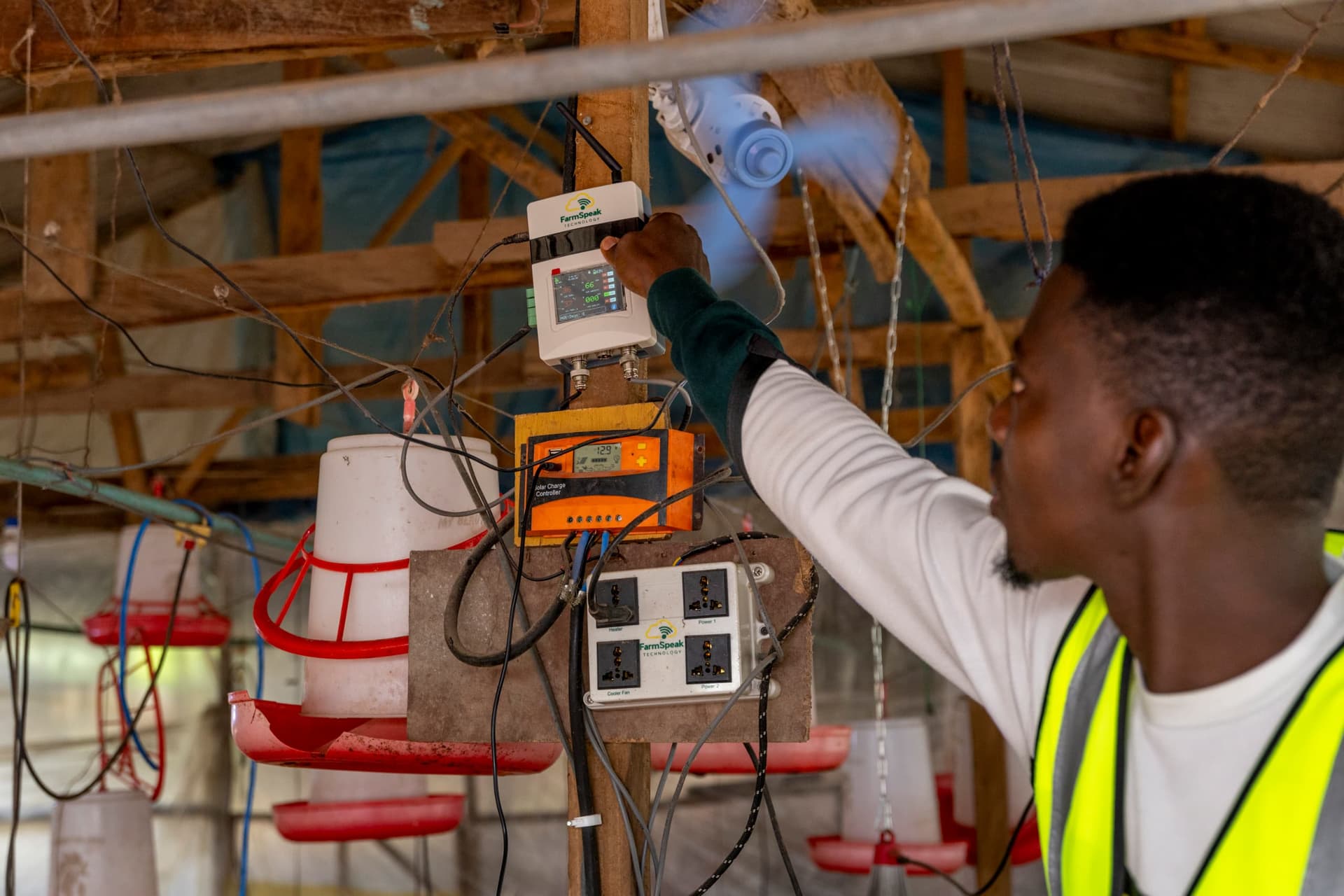
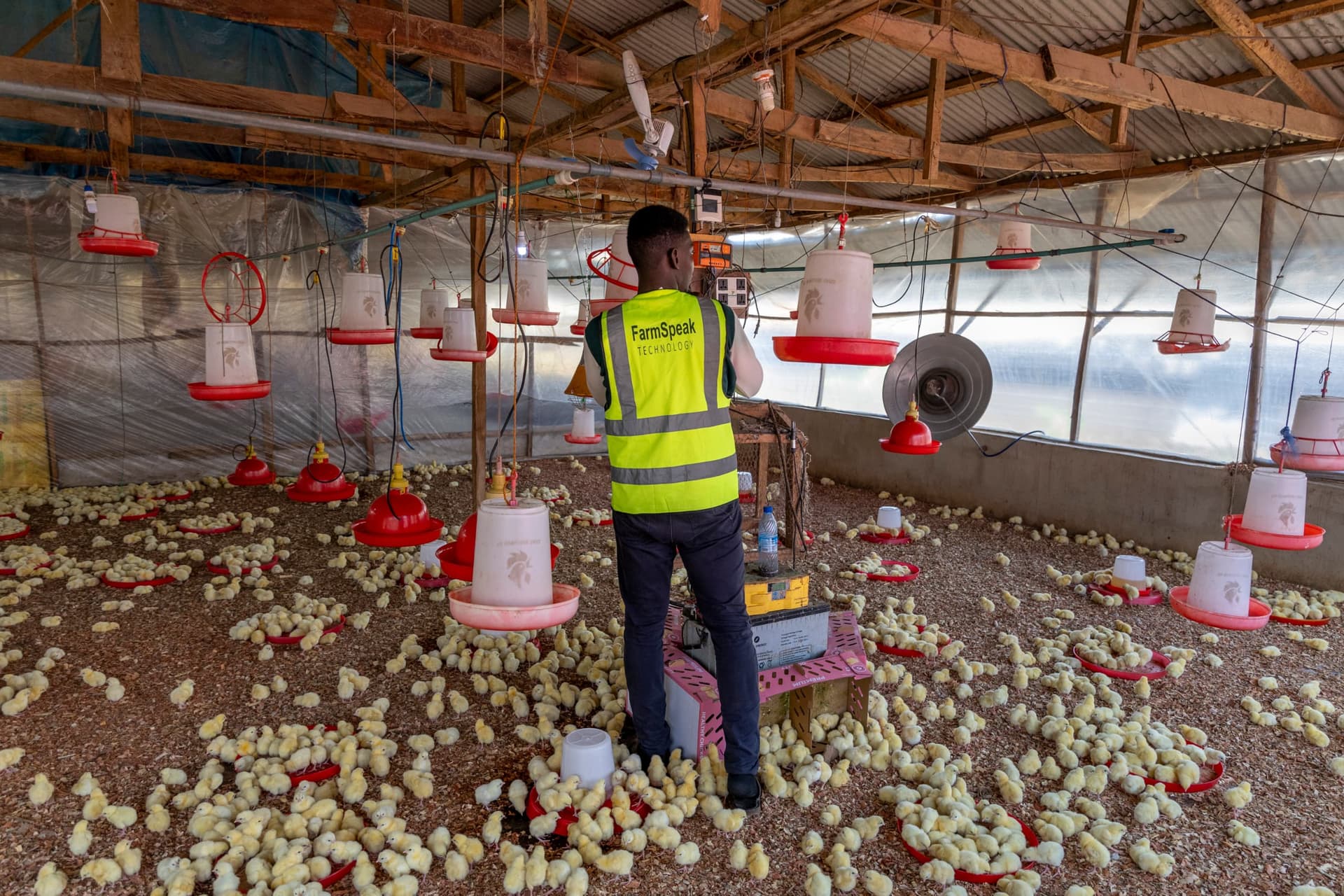
Once a PENKEEP leaves the workshop it goes to a real pen or greenhouse. Every install is documented; every reading tunes the next batch.
Six stages, one signed-off unit
From bare board to farm-installed
Every PENKEEP goes through the same six stages, and no unit skips any of them. Nobody signs off on their own work.
Step 1
Board design, development and testing
Every PCB that is designed and developed, gets bench-tested for continuity and power rails, then flashed with the latest PENKEEP firmware based on the farm it will be deployed. Boards that don't pass go back — we don't ship anything we wouldn't install on our own farm.
Step 2
Sensor calibration
Temperature, humidity,moisture content sensor Probe, PH probe, ammonia and CO₂ probes are calibrated against a reference instrument before installation into the enclosure. ±0.5°C on temperature, ±3% RH on humidity — meets HACCP and Aviagen management-guide requirements.
Step 3
Enclosure assembly
Boards mount into a poultry-grade splash-resistant enclosure. Cabling routed, strain-relieved and heat-shrunk. Every unit is inspected by a second person before final closure — nobody signs off on their own work.
Step 4
Burn-in test
Every completed unit runs a 24-hour burn-in against a reference environment. Readings must stay within ±0.5°C of the calibration and network connectivity must hold across three router reboots.
Step 5
Field install
Once a PENKEEP passes burn-in it ships to a farm. Our install team mounts it, wires the heater / fan / aerator loads and walks the farmer through the first-week readings. Every install documented with photos.
Step 6
Continuous feedback
Every reading from every deployed PENKEEP feeds back into how the next batch is tuned. Firmware improvements, sensor placements, enclosure tweaks — the fleet gets better every quarter because we can see how it's actually behaving.
Sourcing standards
Chosen for reliability, not cost
A PENKEEP has to work for years in a hot, humid, ammonia-heavy pen or a sun-drenched greenhouse. The parts we pick reflect that operating environment — not the cheapest catalog listing.
Sensors
DHT22 for temperature/humidity, MQ-137 for ammonia, MG-811 for CO₂ — proven parts with published tolerances, not the cheapest cost-down alternative.
MCU
Industrial-grade microcontroller with hardware watchdog. Reboots itself if the firmware ever locks up so a farm never wakes to a silent device.
Enclosure
IP54-rated polycarbonate housing — dust-tight, splash-resistant. Rated for pen conditions where wash-down and ammonia are daily.
Battery
LiFePO₄ pack for battery backup — safer chemistry than Li-ion, longer cycle life, no thermal-runaway risk in a hot pen.
Who this is for
Smallholder and mid-scale, not just industrial
The commercial tools built for 100,000-bird operations don't serve the family compound in Enugu or the co-op in Kaduna. That's who we build for. Our pricing, hardware footprint and installation approach are all sized to work at 500 birds as well as they work at 20,000.
Same platform, five verticals. The same PENKEEP and FS Manager serve everyone below:
Tour the workshop, in person or on a call
Farmer visiting Lagos or Ogun? Come see the workshop. Investor or grant funder doing diligence? We'll walk you through end-to-end on a call. Either way — this isn't a slide deck.