
For open-field crops
Smart irrigation
Water when the crop needs it, not when a clock says to.
Soil-moisture probes in the root zone, connected to solenoid valves at your header. When soil moisture drops below the crop\'s target, valves open; when it hits field capacity, they close. Field-tested for maize, cassava, tomato, pepper and onion. Cuts water bills 20–40% without cutting yield.
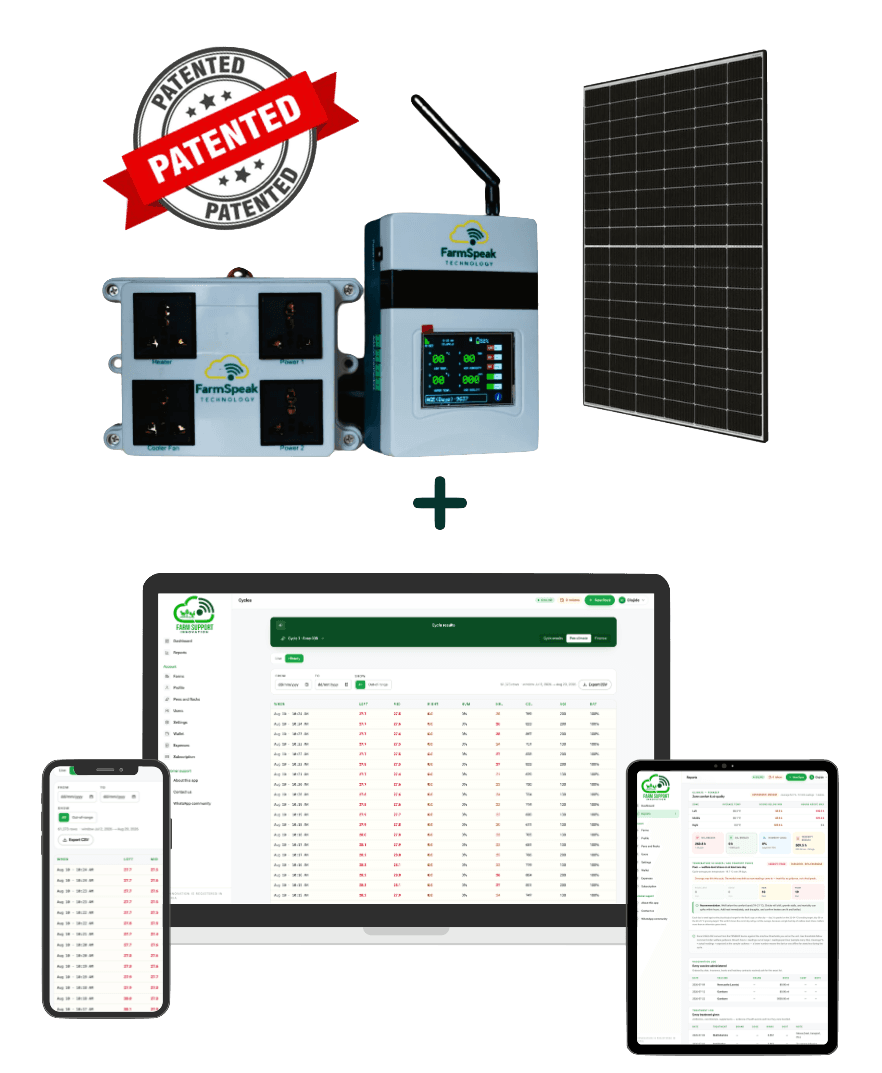
Hardware
PENKEEP irrigation controller
Soil-moisture probes buried at 15 cm and 30 cm in the root zone report every 30 seconds. Controller switches solenoid valves at your header. Solar-powered — no mains needed at the field.
Software
FS Manager
Set the moisture band per crop and per bed. FS Manager runs the valves automatically and logs every water event with volume, duration and moisture curve. Compare rain-fed vs irrigated blocks, and see cost per hectare per season.
What you can do
Every feature we ship for smart irrigation
Root-zone moisture-driven scheduling
No fixed timers. Valves open only when the soil actually needs water, driven by probes buried where the roots live.
Rain awareness
Weather forecast integration means the controller skips its scheduled window when rain is coming in the next 6 hours.
Per-crop moisture bands
Maize wants different moisture at tassel than cassava at bulking. Presets ship for major staples; custom bands per bed for anything else.
Water-use accounting
Every valve-open event logged with duration and estimated volume so a season's total water cost is one CSV export away.
Solar-powered field units
PENKEEP irrigation runs on a small solar panel + battery. No mains needed at the field, no monthly grid bill.
Yield-vs-input compare
FS Manager rolls up water + fertilizer + labor against yield per bed so you can compare rain-fed vs drip-fed blocks honestly.
How it works
From signup to first insight
Step 1
Design the layout with our team
We survey your field, identify header locations, pick probe positions and valve counts. Free scoping visit anywhere in Nigeria.
Step 2
We install the hardware
Probes buried, valves plumbed, controller mounted, solar panel angled. Typically one to two days per hectare depending on layout.
Step 3
Set your moisture bands and forget
Pick the crop per bed, set the moisture target, and the system runs. You get alerts if a probe or valve stops responding.
Metrics we track
The numbers that matter for this vertical
Water savings
20 – 40%
Vs fixed-timer irrigation
Probe depth
15 / 30 cm
Root-zone accuracy
Field power
Solar
No mains needed
Coverage
Per bed
Zone-level control
Common questions
Before you buy
- How many probes do I need per hectare?
- Depends on soil variability. Sandy-uniform blocks: one probe pair per hectare works. Mixed clay/loam: two or three pairs per hectare. Our survey visit sets the exact count before you commit to hardware.
- Which crops have moisture-band presets?
- Maize, cassava, tomato, pepper, onion, watermelon and soybean today. Presets are stage-aware — the moisture target changes as the crop moves from vegetative to reproductive to bulking. Contact us for anything not on that list and we'll seed the presets.
- What if my valves are older / different voltage?
- PENKEEP's valve output is 24V AC (the industry standard). If your existing valves run on something else, our install team spec's a small relay board that converts. Adds a day to the install; no code change needed.
- Does it work without cell coverage?
- The controller runs the schedule autonomously and logs to local storage. When cell coverage returns (or you visit with a hotspot) the readings sync. You lose real-time alerts during the offline period but the crop stays watered.
Start on Smart irrigation today
Pay only for what you use — no subscription, no lock-in. Add PENKEEP hardware when you're ready for real-time monitoring.